Choosing the right cloud hosting provider can affect your costs, performance, and long-term flexibility. With so many platforms available, it helps to focus on a short list that covers different needs, budgets, and free trial options.
In this guide, you’ll find a clear comparison of the 6 top cloud hosting providers, including starting prices, free tiers, and who each platform suits best. The goal is simple: help you quickly understand your options and pick a cloud provider that matches your workload, whether you’re testing a project, running production apps, or supporting business growth.
What Is Cloud Hosting?
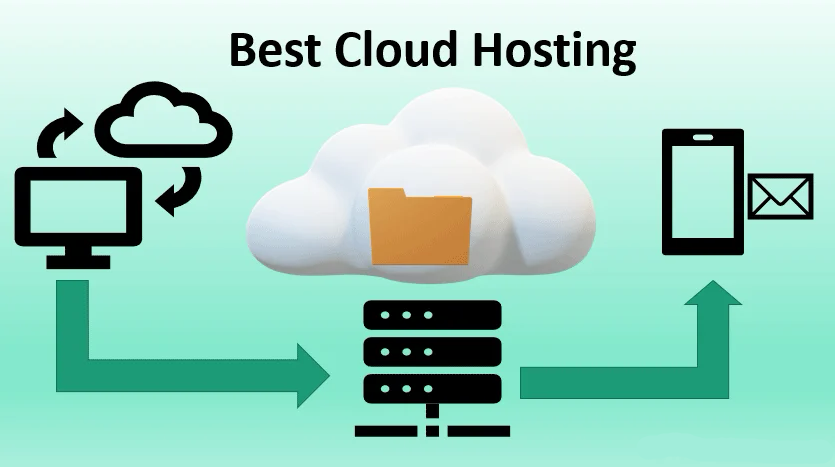
Cloud hosting is a type of hosting where your website or application runs on a network of connected servers instead of a single physical machine. Resources like CPU, memory, and storage come from a shared pool, which means your workload can use more power when demand increases and scale down when it doesn’t.
Unlike traditional shared or VPS hosting, cloud hosting reduces the risk of downtime caused by a single server failure. If one server goes offline, another takes over. Most cloud platforms also use pay-as-you-go pricing, so you only pay for the resources you actually use. This makes cloud hosting a common choice for startups, developers, and businesses that want flexibility, predictable performance, and room to grow without migrating servers later.
How We Selected These Cloud Hosting Providers?
This list focuses on cloud platforms that real users actively consider when comparing price, reliability, and entry-level access. Each provider was reviewed using clear, practical criteria instead of marketing claims.
We looked closely at starting prices, availability of a free tier or trial, and how easy it is to get started without long-term commitments. Platforms with hidden costs, unclear billing, or complex onboarding were avoided. We also considered global infrastructure, uptime track record, and whether the provider is widely trusted by developers, startups, or enterprises.
To keep this guide useful, the list is limited to six providers that represent different use cases—budget-friendly testing, developer-focused flexibility, enterprise workloads, and global reach. Every provider included here publishes transparent pricing, offers hands-on documentation, and supports real-world production deployments.
Comparison Table: 6 Top Cloud Hosting Providers
The table below gives you a quick, side-by-side view of pricing, free tiers, and ideal use cases. It’s designed to help you compare options fast before diving into detailed provider sections.
| Cloud Provider | Starting Price | Free Tier / Trial | Best For |
|---|---|---|---|
| Atlantic.Net | $10/month | 1-year free tier | Businesses that want simple pricing and long-term testing |
| Kamatera | $5/month | 1-month free trial | Developers who need flexible server customization |
| Alibaba Cloud | $10–$15/month | 1-year free tier | Projects targeting the Asia-Pacific regions |
| Google Cloud Platform | $7.55/month | 3-month free trial | Data-driven apps and modern web workloads |
| Amazon Web Services | $5/month | 1-year free tier | Teams that need a wide range of cloud services |
| Microsoft Azure | $10–$20/month | 1-month free tier | Enterprises using Microsoft tools and Windows workloads |
Top Cloud Hosting Providers 2026
Below is a curated list of cloud hosting platforms based on pricing clarity, free tiers, and real-world usage.
1. Atlantic.Net
Atlantic.Net is a long-established cloud hosting provider trusted by businesses that need reliability, compliance, and predictable pricing. The platform focuses on keeping services online at all times, supported by redundant data centers across the United States and Europe. This setup helps reduce downtime and keeps applications accessible even during infrastructure issues. With a strong focus on security and compliance, Atlantic.Net is often chosen by organizations that handle sensitive data and require stable cloud environments.
Atlantic.Net’s Key Features
100% uptime commitment backed by redundant data centers in the U.S. and Europe, helping keep websites and applications online
HIPAA-compliant cloud hosting with encrypted storage and secure server access, suitable for healthcare and financial workloads
Flexible resource scaling, allowing you to adjust CPU, RAM, and storage without moving or rebuilding servers
24/7 customer support via chat, email, and phone, with fast response times for technical issues
Best For: Best for businesses that need compliant, always-on cloud hosting with clear pricing and responsive support.
Pricing
Starting price: $10/month
1-year free tier available
2. Kamatera
Kamatera is a cloud hosting platform built for speed, control, and flexibility. It lets you launch servers in minutes and fine-tune resources based on your exact needs. With data centers spread across multiple regions worldwide, Kamatera suits projects that need fast deployment and low latency without long-term contracts.
Kamatera’s Key Features
Custom server configuration, allowing you to choose CPU cores, RAM, storage, and operating system
Global data center network, helping reduce latency for users in different regions
Instant server deployment, so you can start testing or running workloads almost immediately
Transparent hourly or monthly billing, making cost control easier for short-term and long-term use
Best For: Best for developers, startups, and SaaS teams that want full control over server resources with a short free trial.
Pricing
Starting price: $5/month
1-month free trial available
3. Alibaba Cloud
Alibaba Cloud is a global cloud hosting provider with a strong presence across Asia-Pacific, Europe, and North America. It is widely used by businesses that need reliable cloud infrastructure close to Asian markets. The platform offers a broad set of cloud services while keeping entry-level pricing competitive for new users and growing teams.
Alibaba Cloud’s Key Features
Elastic Compute Service (ECS) instances with SSD storage for stable performance
Extensive Asia-Pacific coverage, making it easier to host applications closer to regional users
Built-in security tools, including DDoS protection and access controls
Flexible scaling options, allowing you to increase resources as traffic grows
Best For: Best for companies targeting users in Asia or running workloads that need strong regional coverage.
Pricing
Starting price: $10–$15/month
1-year free tier available
4. Google Cloud Platform
Google Cloud Platform (GCP) is a cloud hosting platform built around high-performance infrastructure and efficient networking. It is commonly used for web applications, APIs, and data-focused workloads where speed and consistency matter. GCP keeps pricing flexible with per-second billing, which helps control costs when workloads scale up or down.
Google Cloud’s Key Features
Compute Engine virtual machines with fast SSD storage and custom machine types
Per-second billing, so you only pay for the time your servers actually run
Strong global network, designed to deliver low-latency access across regions
Integrated tools for data and analytics, including managed databases and monitoring
Best For: Best for developers and teams building modern web apps, APIs, or data-driven projects.
Pricing
Starting price: $7.55/month
3-month free trial available
5. Amazon Web Services
Amazon Web Services (AWS) is one of the most widely used cloud hosting platforms in the world. It offers a large range of services built on a global infrastructure that supports everything from small test projects to high-traffic production systems. AWS is often chosen for its reliability, global reach, and long-standing track record in cloud computing.
Amazon Web Service Key Features
EC2 virtual servers with multiple instance types for different workloads
Global data center network, allowing applications to run close to users worldwide
Pay-as-you-go pricing, which helps manage costs as usage changes
Large service ecosystem, including storage, databases, networking, and security tools
Best For: Best for teams that need a mature cloud platform with global availability and a wide choice of services.
Pricing
Starting price: $5/month
1-year free tier available
6. Microsoft Azure
Microsoft Azure is a cloud hosting platform widely used by enterprises and teams already working within the Microsoft ecosystem. It supports a broad range of workloads, from simple virtual machines to large business applications. Azure also works well in hybrid setups, where on-premise systems connect directly with cloud resources.
Azure’s Key Features
Azure Virtual Machines with support for both Windows and Linux operating systems
Strong integration with Microsoft tools, including Windows Server, Active Directory, and SQL Server
Hybrid cloud support, allowing on-premise and cloud environments to work together
Enterprise-grade security and compliance controls, suitable for regulated industries
Best For: Best for enterprises and teams that rely on Microsoft products or need hybrid cloud support.
Pricing
Starting price: $10–$20/month
1-month free tier available
Conclusion
Choosing among the 6 top cloud hosting providers depends on what you need today and how you expect your workload to grow. Some platforms focus on long free tiers and simple pricing, while others stand out for global reach, enterprise tools, or deep integration with existing software stacks. The key is to match the provider’s strengths with your actual use case instead of picking the biggest name by default.
If you want predictable pricing and long-term testing, Atlantic.Net and AWS offer generous free tiers. Kamatera works well when you need full control over server resources with fast setup. Alibaba Cloud makes sense for projects aimed at Asian markets. Google Cloud Platform suits modern web apps and data-focused workloads, while Microsoft Azure fits teams already using Microsoft tools or hybrid environments.
Before committing, review each provider’s free tier limits, billing model, and regional availability. Starting with a trial or free plan lets you test performance and usability without risk, making it easier to choose a cloud hosting provider that supports your project now and in the future.
FAQs
1. Which cloud hosting provider is best for beginners?
For beginners, providers with simple dashboards and clear pricing are easier to start with. Atlantic.Net and AWS are often good choices because they offer free tiers, straightforward virtual machine setups, and extensive documentation that helps new users learn as they go.
2. Which cloud hosting provider has the longest free tier?
Several platforms offer long free tiers, but Atlantic.Net, AWS, and Alibaba Cloud provide free access for up to one year. This allows you to test cloud hosting without upfront costs, as long as you stay within the free usage limits.
3. Is cloud hosting better than VPS hosting?
Cloud hosting and VPS hosting serve different needs. Cloud hosting runs on multiple servers, which helps reduce downtime and allows resources to scale more easily. VPS hosting usually runs on a single server, which can limit flexibility when traffic changes.
4. Can I switch cloud hosting providers later?
Yes, most applications can be moved between cloud providers. The process depends on how your servers, storage, and databases are set up. Using standard operating systems and open-source tools makes switching providers easier in the future.